Paro Tsechu
Origin and Importance of Festival (Tshechu)
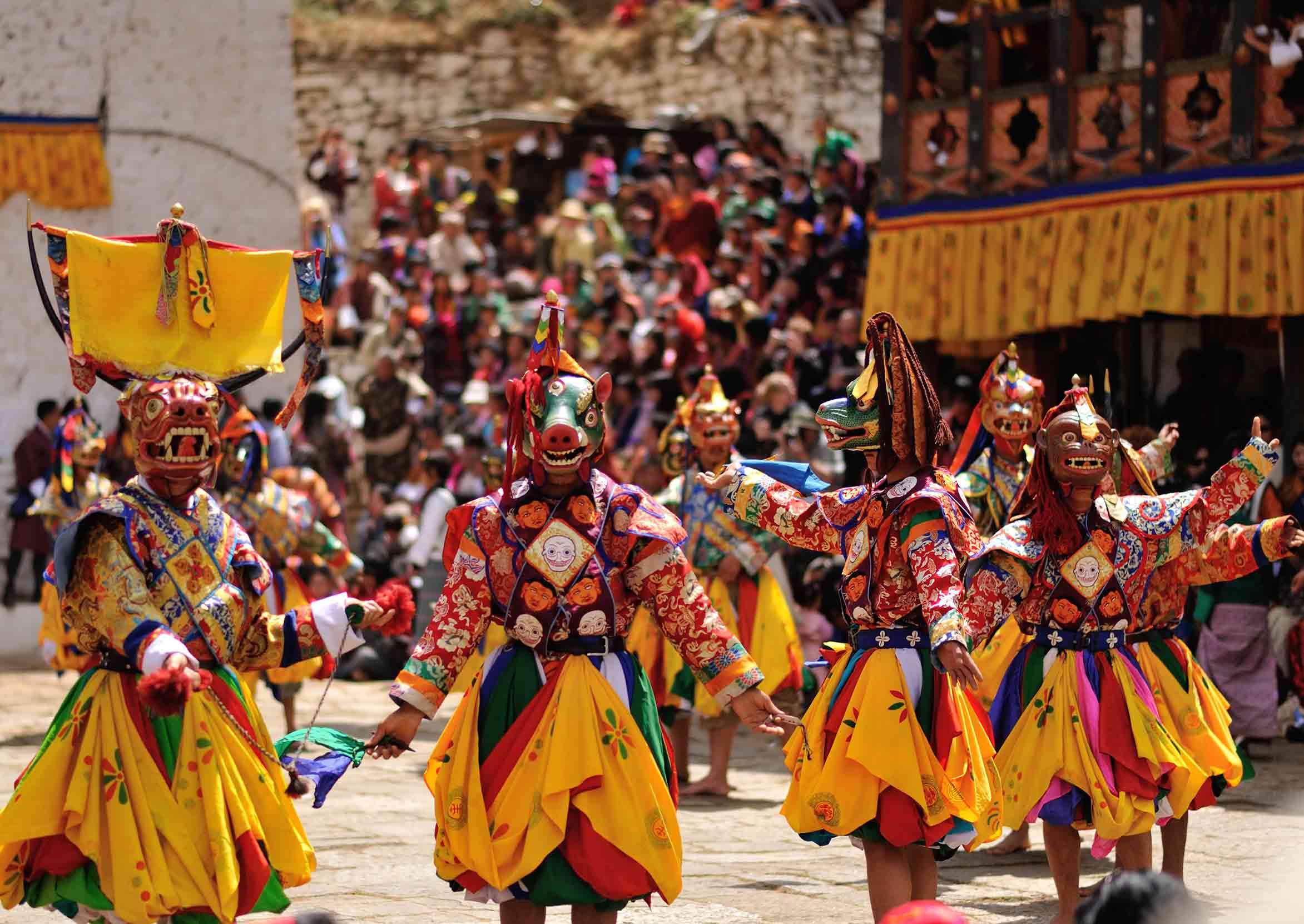
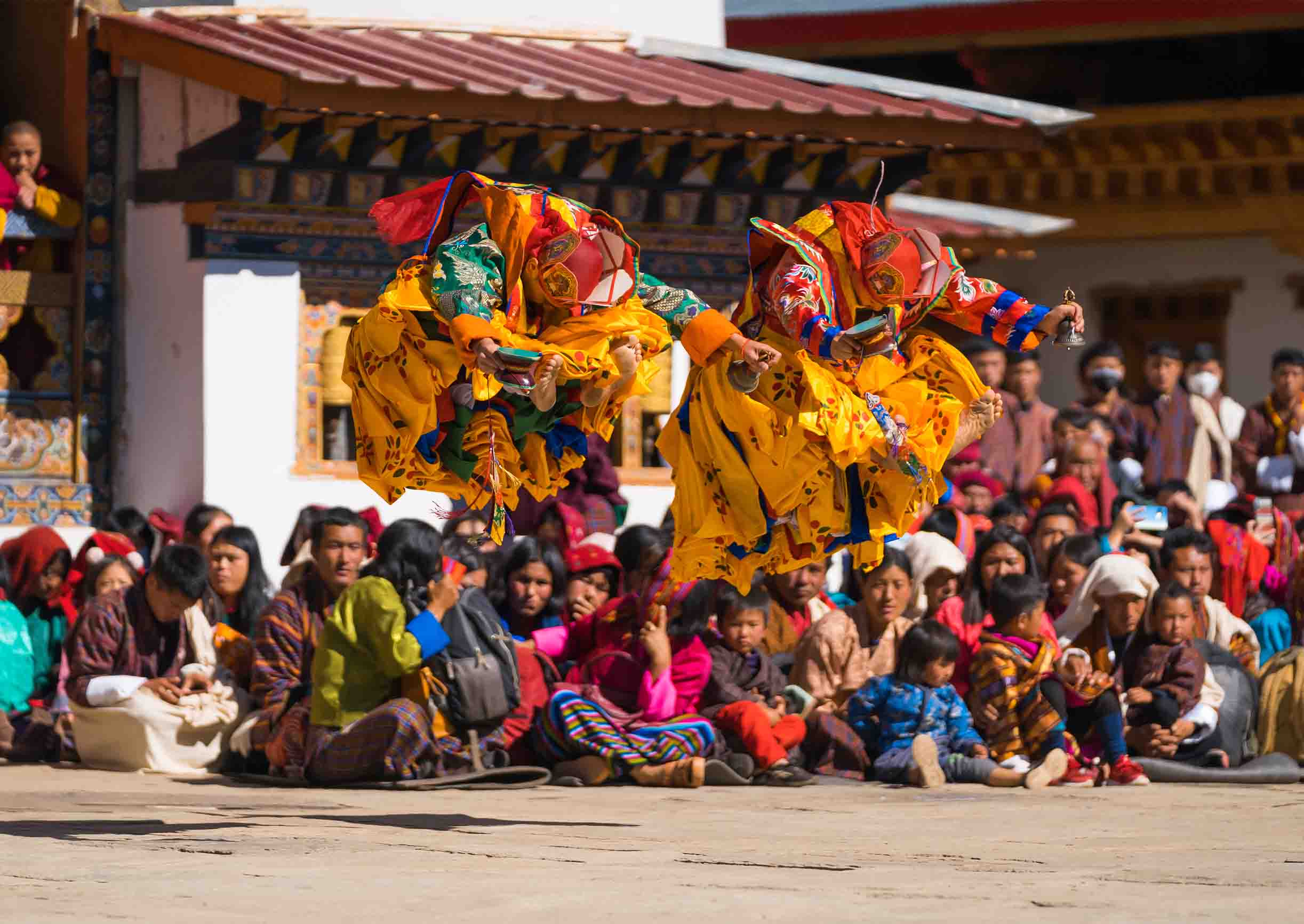
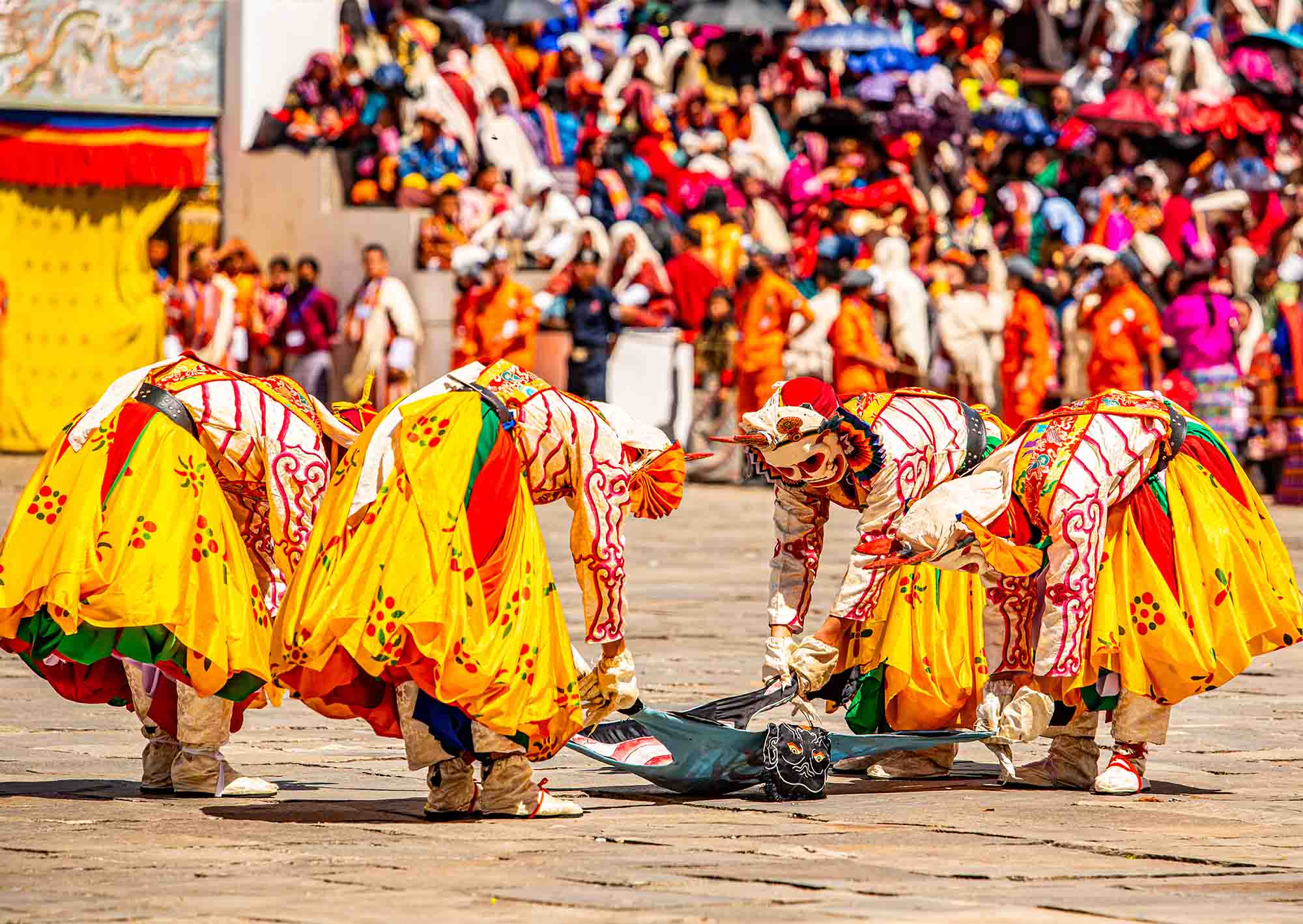
Buddhist festival or tshechu are one of the prime example of the living culture of Bhutan that many have come to admire and treasure it. In almost every Dzongs (fortresses that house both the monastic & the Govt. administrative wings) there is an annual traditional festival (Tsechu) that normally spans 3-4 days. These vibrant, colorful & well choreographed mask dances are performed during the Tsechu.
The Tshechu is a festival in honour of Padmasambhava, “one who was born from the lotus flower”, popularly known as “Guru Rinpoche”, the Precious Teacher. This Indian saint contributed enormously to the diffusion of Tantric Buddhism in the Himalayan regions of Tibet, Nepal, Bhutan etc. around 800 A.D. he is the founder of Nyingmapa, the “old school” of Mahayana Buddhism, which still has numerous episodes on the model of the Buddha Shakyamuni’s life. The festival of sacred dances is held annually. It was Drukpa Kuenley’s descendant, Tenzin Rabgye, the 4th Temporal Ruler, who established the tradition of Tshechu in 1670 on the 10th day of the 8th month of the Bhutanese calendar to commemorate the birth anniversary of Guru Rinpoche. The dates and the duration of the festival vary from one district to another but they always take place on or around the 10th day of the month according to the Bhutanese calendar. Zhabdrung Ngawang Namgyal and Pema Lingpa established many of the dances performed during tsechus.
During tshechu, the monks as well as laymen perform the dances. The dancers take on the aspects of wrathful and compassionate deities, heroes, demons and animals. The dances known as cham, bring blessing upon the onlookers, instruct them in dharma (Buddhist teachings), protect them from misfortune and exorcise evil influences. The tshechu is a religious festival and by attending it, it is believed one gains merits. Deities are invoked during the dances. Through their power and benediction misfortunes may be destroyed, luck increased and wishes realized. It is also a yearly social gathering where the people come together to rejoice. People come for tshechu dressed in their finery.
Paro Tshechu
It is the most popular in the country with its unique unfurling of the world largest Thangka or Thongdrel ceremony, the pageantry is a unique experience and quite unlike anything you have ever seen before. The festival commemorates the deed of the great saint Guru Rinpoche who brought tantric form of
Buddhism in Bhutan in early 8th century.
The local people attend the festival to gain merit; it is a festive event where the people are dressed in their finest colorful costumes to socialize the merry.